
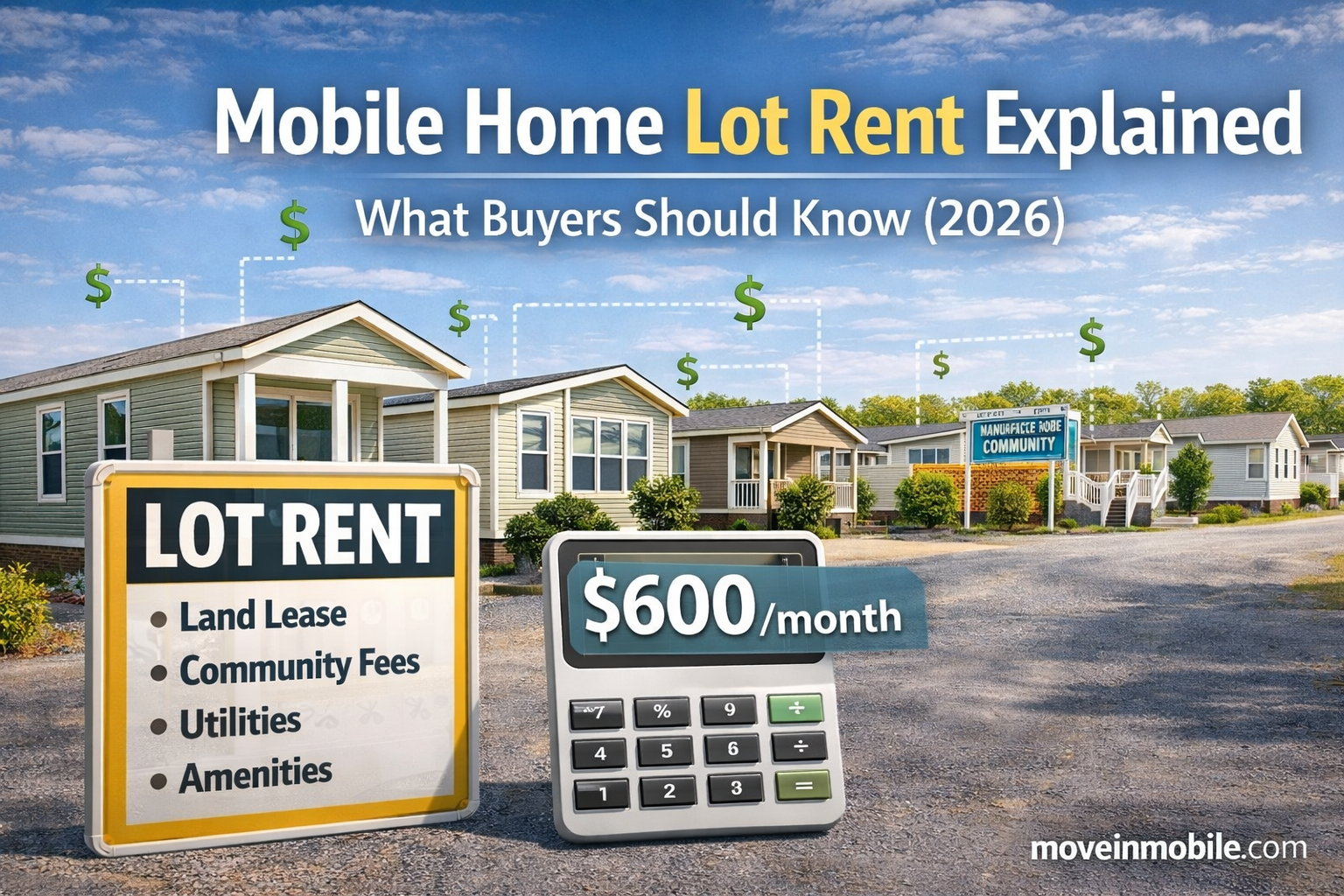
One of the most misunderstood aspects of manufactured housing is lot rent. Many buyers see an attractive mobile home price and assume the monthly cost of living will remain extremely low. However, when a home is located inside a mobile home community, lot rent becomes an important part of the total cost.
Understanding how lot rent works helps both buyers and sellers make smarter decisions in the manufactured housing market.
In 2026, more buyers are researching these costs before purchasing a home, which means dealers, brokers, and community owners should be prepared to explain how the system works.
What Lot Rent Actually Covers
Lot rent is the monthly fee paid by a homeowner to lease the land where their mobile home sits. In most manufactured housing communities, residents own the home itself but rent the land beneath it.
Lot rent often covers several services provided by the community, which can include road maintenance, common area landscaping, community amenities, trash services, and sometimes water or sewer utilities.
The exact services vary depending on the community. Some parks offer extensive amenities like pools, clubhouses, and gated security, while others provide only basic infrastructure.
Because of this variation, lot rent prices can vary dramatically between communities.
Why Lot Rent Can Vary So Much
In some areas of the country, lot rent may be only a few hundred dollars per month. In high-demand housing markets, however, lot rent can reach $800 to $1,200 or more.
The largest factors influencing lot rent include location, demand for affordable housing, and the type of community itself. Retirement communities, resort-style communities, and parks located near major cities often charge significantly higher lot rent than rural parks.
This is why buyers researching ownership costs should also understand the full financial picture of living in a manufactured home. A deeper breakdown can be found in The Real Cost of Mobile Home Ownership vs Renting in 2025, which explains how housing costs compare across different living situations.
Lot Rent and Mobile Home Pricing
Lot rent can also influence how homes are priced when they are listed for sale. Homes located in communities with higher rent sometimes sell for lower upfront prices because buyers factor the monthly land lease into their budget.
This relationship between price, rent, and perceived value is one reason buyers also research depreciation trends in manufactured housing. The article The Truth About Mobile Home Depreciation in 2025: What Really Affects Resale Value explains how location and community demand can influence long-term value.
Communities with stable management, strong amenities, and desirable locations often see stronger resale values even when lot rent is higher.
When Buyers Consider Putting Homes on Their Own Land
Some buyers choose to avoid lot rent entirely by placing a manufactured home on private land. While this removes the monthly land lease, it introduces other costs such as installation, site preparation, utility hookups, and zoning considerations.
Buyers researching this option should review Mobile Home Land Ownership: Yes, It’s Possible! which explains how manufactured homes can be placed on privately owned property.
Understanding both options helps buyers determine which housing model fits their long-term financial plans.
Why Transparency Matters in 2026
Today’s buyers are far more informed than they were even a few years ago. Before visiting a property, many already know the lot rent, community rules, and total cost of ownership.
For brokers, dealers, and community managers, being transparent about these costs builds trust and helps attract serious buyers.
As more people search online for manufactured housing opportunities, platforms like MoveInMobile help simplify the process by organizing listings and providing buyers with clearer information about available homes and communities.
The Bottom Line
Lot rent is not necessarily a disadvantage of manufactured housing. In many cases it allows homeowners to live in desirable communities with amenities and infrastructure that would be difficult to maintain individually.
However, understanding how lot rent works is essential for buyers evaluating affordability and for sellers positioning their homes effectively in the market.
The more clearly buyers understand these costs, the more confident they feel about choosing manufactured housing as a long-term living solution.